
Hummus Veggie Bowl Recipe
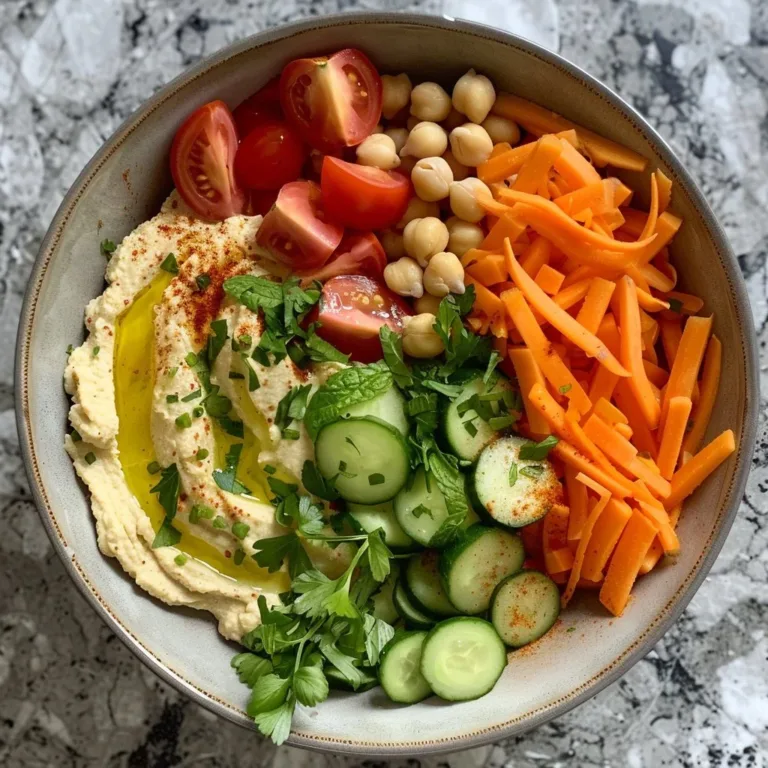
Are you ready to embark on a flavorful journey with the Hummus Veggie Bowl? Bursting with vibrant colors, a delightful mix of textures, and an aromatic allure, this dish is not only visually appealing but incredibly satisfying. The creamy hummus acts as a rich base, while the fresh and crunchy vegetables add a refreshing contrast. This recipe is perfect for lunch or dinner and makes for a fulfilling meal. You will love how easy it is to prepare and how it brings a taste of the Mediterranean right to your kitchen.
Prep Time, Cook Time, Total Time, and Servings
- Prep Time: 15 minutes
- Cook Time: 0 minutes (no cooking required)
- Total Time: 15 minutes
- Servings: 4
Ingredients
-
For the Hummus:
- 1 can (15 oz) chickpeas, drained and rinsed
- 1/4 cup tahini
- 2 tablespoons olive oil
- 2 cloves garlic, minced
- Juice of 1 lemon
- 1/2 teaspoon cumin
- Salt, to taste
- Water, as needed for consistency
-
For the Veggie Bowl:
- 2 cups cooked quinoa or couscous
- 1 cup cherry tomatoes, halved
- 1 cucumber, diced
- 1 bell pepper (any color), diced
- 1 cup shredded carrots
- 1 avocado, diced
- 1/4 cup red onion, finely chopped
- 1/4 cup fresh parsley, chopped
- Feta cheese (optional), crumbled
- Olives (optional), for garnish
Instructions
-
Prepare the Hummus:
- In a food processor, combine the chickpeas, tahini, olive oil, minced garlic, lemon juice, cumin, and salt.
- Blend the ingredients until smooth. If the hummus is too thick, gradually add water, a tablespoon at a time, until you reach your desired creamy consistency.
-
Cook Quinoa or Couscous (if not pre-cooked):
- If you’re using uncooked quinoa or couscous, rinse it under cold water.
- For quinoa, cook 1 cup of quinoa with 2 cups of water: bring to a boil, then reduce to a simmer, cover, and cook for 15 minutes. Fluff with a fork. For couscous, follow package instructions, typically requiring 1 cup of couscous to 1.5 cups of boiling water, covered for 5 minutes.
-
Prepare the Vegetables:
- While the hummus is blending, wash and chop all the vegetables. Make sure to cut them into bite-sized pieces for easy eating.
-
Assemble the Bowl:
- In a large bowl or meal prep containers, start with a base of quinoa or couscous.
- Add a generous scoop of the homemade hummus on one side.
- Artistically arrange the cherry tomatoes, cucumber, bell pepper, carrots, avocado, red onion, and parsley next to the hummus.
-
Add Final Touches:
- If desired, sprinkle crumbled feta cheese over the vegetables and add olives for an extra burst of flavor.
- Drizzle with a little more olive oil and a sprinkle of salt and pepper.
-
Serve:
- Serve immediately or store in the fridge for a quick and healthy meal throughout the week.
Pro Tips for Perfect Results
-
Chickpeas Matter: For an ultra-smooth hummus, try peeling the chickpeas. It takes a bit more effort but severely improves the texture.
-
Chill Your Ingredients: If you want to make your bowl even more refreshing, chill your vegetables in the fridge before preparing the bowl.
-
Customize Your Hummus: Experiment with different flavorings in your hummus, such as roasted red peppers, sun-dried tomatoes, or even spices like smoked paprika for a unique twist.
-
Add Crunch: For added crunch, consider including seeds such as sunflower or pumpkin seeds as toppings.
-
Presentation is Key: Arrange your ingredients aesthetically for a beautiful presentation. Not only does it look good, but it also makes eating more enjoyable.
Variations and Substitutions
- Grains: Substitute quinoa or couscous with farro, brown rice, or even a whole grain pasta for variation.
- Vegetables: Feel free to use seasonal vegetables like zucchini, steamed broccoli, or roasted beets.
- Creamy Alternatives: Swap the tahini for Greek yogurt for a lighter source of creaminess.
- Vegan Option: Leave out the feta cheese to keep it entirely plant-based.
- Herbs: Other herbs such as cilantro, dill, or mint can freshen things up.
Storage and Reheating Tips
- Storage: Keep leftover hummus in an airtight container in the fridge, where it will last for up to one week. The veggie bowl components can also be stored separately for optimal freshness.
- Reheating: If you’ve stored the quinoa or couscous, reheat it in the microwave for about 1 minute or until warm. You can also serve the bowl cold for a refreshing experience.
FAQ
1. Can I use store-bought hummus instead of making it?
Yes, you can absolutely use store-bought hummus. Just make sure to choose a brand that you enjoy and that’s made with quality ingredients.
2. What other toppings can I add to the Hummus Veggie Bowl?
Toppings like roasted chickpeas, seeds, or sprouts would enhance both texture and flavor. Consider sprinkling some za’atar or dukkah for extra spice.
3. How can I make this bowl gluten-free?
This dish can easily be made gluten-free by choosing quinoa or gluten-free grains, and skipping couscous.
4. Can I prepare the ingredients in advance?
Yes, you can chop all vegetables a day in advance. Store them in the fridge to keep them fresh. The hummus can also be made ahead of time.
5. Is it possible to freeze the finished bowl?
It’s not recommended to freeze the bowl as vegetables can become mushy upon thawing. However, the hummus can be frozen for up to 3 months.
Nutrition Estimate
Each serving of the Hummus Veggie Bowl contains approximately 450 calories, with 12 grams of protein, 60 grams of carbohydrates, and 24 grams of fat. This nutrient-rich dish is packed with vitamins from fresh vegetables and provides a satisfying balance of healthy fats, fiber, and plant-based protein.
This Hummus Veggie Bowl is not just a meal; it’s an experience—a delightful way to nourish your body with wholesome ingredients while indulging in the rich flavors of the Mediterranean. Enjoy every bite!
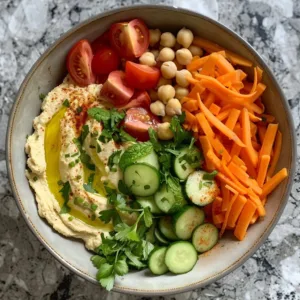
Hummus Veggie Bowl
Ingredients
For the Hummus
- 1 can 15 oz chickpeas, drained and rinsed
- 1/4 cup tahini
- 2 tablespoons olive oil
- 2 cloves garlic, minced
- 1 juice of lemon
- 1/2 teaspoon cumin
- to taste Salt
- as needed Water for consistency
For the Veggie Bowl
- 2 cups cooked quinoa or couscous
- 1 cup cherry tomatoes, halved
- 1 cup shredded carrots
- 1/4 cup red onion, finely chopped
- 1/4 cup fresh parsley, chopped
- optional Feta cheese, crumbled
- optional Olives, for garnish
Instructions
Prepare the Hummus
- In a food processor, combine the chickpeas, tahini, olive oil, minced garlic, lemon juice, cumin, and salt.
- Blend the ingredients until smooth. If the hummus is too thick, gradually add water, a tablespoon at a time, until you reach your desired creamy consistency.
Cook Quinoa or Couscous (if not pre-cooked)
- If you're using uncooked quinoa or couscous, rinse it under cold water.
- For quinoa, cook 1 cup of quinoa with 2 cups of water: bring to a boil, then reduce to a simmer, cover, and cook for 15 minutes. Fluff with a fork.
- For couscous, follow package instructions, typically requiring 1 cup of couscous to 1.5 cups of boiling water, covered for 5 minutes.
Prepare the Vegetables
- While the hummus is blending, wash and chop all the vegetables. Make sure to cut them into bite-sized pieces for easy eating.
Assemble the Bowl
- In a large bowl or meal prep containers, start with a base of quinoa or couscous.
- Add a generous scoop of the homemade hummus on one side.
- Artistically arrange the cherry tomatoes, cucumber, bell pepper, carrots, avocado, red onion, and parsley next to the hummus.
Add Final Touches
- If desired, sprinkle crumbled feta cheese over the vegetables and add olives for an extra burst of flavor.
- Drizzle with a little more olive oil and a sprinkle of salt and pepper.
Serve
- Serve immediately or store in the fridge for a quick and healthy meal throughout the week.